


The Businesses That Stay Ready Don’t Think About Safety The Same Way - Why businesses fail workplace inspections

Walk into two different workplaces on the same day.
Same industry.
Same number of staff.
Same economic pressure.
Same loadshedding schedule.
But the feeling is completely different.
In one business:
people move with clarity,
problems get reported early,
walkways stay clear,
equipment gets checked,
managers know what’s happening on the floor.
In the other?
Everyone is reacting.
The fire extinguisher service is overdue.Nobody knows where the first aid checklist went.The safety file is somewhere in reception.People step over hazards because:
“Someone else will deal with it.”

One workplace feels controlled.
The other feels held together with WhatsApps and hope.
And that difference matters far more than most businesses realise.
Because Safety Is Never Just About Safety - Why businesses fail workplace inspections
Safety Is Usually A Reflection Of How A Business Operates Under Pressure.
That’s one of the biggest misconceptions in South African business. People think workplace safety is:
paperwork,
inspections,
posters,
rules,
or “that compliance thing.”
But when you look closely at high-performing workplaces… you notice something else. Safety is usually a reflection of operational discipline.
The businesses that manage safety well often also:
communicate better,
maintain equipment better,
manage people better,
solve problems earlier,
and operate with less chaos overall.
"That’s not coincidence. That’s culture."
Most Workplace Risk Doesn’t Arrive Dramatically
It drifts in quietly.
A blocked fire exit that becomes “temporary.”
A loose cable everyone stops noticing.
A first aider whose certificate expired months ago.
A forklift bump nobody reported because:
“It wasn’t serious.”
And slowly, the workplace adapts to dysfunction. That’s the dangerous part.
Because human beings normalise almost anything if they see it often enough. Even risk.
Especially risk.

South Africans Are Very Good At “Making A Plan”
Honestly?
It’s one of our strengths.
But sometimes that mindset quietly becomes:
“We’ll sort it out later.”
And later has a strange habit of arriving all at once. Usually:
during inspections,
after incidents,
or when someone finally asks:
“Who’s actually responsible for this?”
That’s when businesses discover the difference between:
looking organised,
and actually being operationally ready.

The Businesses That Perform Best Under Pressure Usually Have One Thing In Common
They don’t treat safety as an event. Not something that suddenly appears:
before audits,
after incidents,
or when clients request documents.
They build it into normal operations. Quietly. Consistently. Practically. Not perfectly. Just intentionally.
They Understand Something Most Businesses Miss
Inspectors are not only looking at paperwork. They’re reading the environment.
They notice:
whether employees understand procedures,
whether hazards are ignored,
whether leadership is involved,
whether systems are alive or just archived in a lever arch file.
That’s why some businesses feel calm during inspections…
while others suddenly resemble a matric study group the night before finals and why businesses fail workplace inspections

The Interesting Thing About Operationally Strong Businesses… Their workplaces usually feel lighter.
Not because they have fewer responsibilities. Because people know:
what’s expected,
where things are,
how problems get handled,
and who takes ownership.
That reduces:
confusion,
frustration,
panic,
and operational drag.
Good systems create breathing room. Bad systems create noise.
And No… This Isn’t About “Perfect Compliance”
That’s where many SMEs disconnect from safety conversations. They assume:
“We can never get all of this right.”
But operationally strong businesses don’t obsess over perfection.
They focus on:
consistency,
awareness,
accountability,
and continuous improvement.
That’s achievable. Very achievable.
This Is Why We Created The RITE OHS Inspection Ready Guide
Not to overwhelm businesses with legal jargon. There’s already enough confusion in the safety space. The guide was designed to help South African SMEs:
simplify what matters,
identify operational gaps early,
understand what inspectors actually look for,
and create safer, more functional workplaces.
Inside the guide you’ll find:
practical inspection checklists,
simplified OHS language,
risk assessment guidance,
first aid awareness,
fire safety guidance,
PPE insights,
committee guidance,
and practical workplace safety systems.
Not theory - Practical operational clarity
Download The Free RITE OHS Inspection Ready Guide

Practical. Straight forward. Built for South African SMEs.
It's a Large File - download in wifi
The strongest businesses are rarely the loudest. They’re usually the ones where:
people know their roles,
systems are maintained,
issues get addressed early,
and safety becomes part of how the business operates every day.
Not because inspectors might arrive. Because operational discipline compounds over time. And eventually…you can feel the difference the moment you walk through the door.
Common Questions South African Businesses Ask About Workplace Safety
What do Department of Labour inspectors check?
Inspectors typically assess:
workplace risks,
safety systems,
training records,
emergency preparedness,
employee awareness,
incident reporting,
and whether procedures are actively implemented.
Why do SMEs fail workplace inspections?
Most SMEs fail inspections because systems drift over time.
Hazards become normalised, accountability weakens and operational pressure slowly breaks consistency..
What should be included in a workplace safety file?
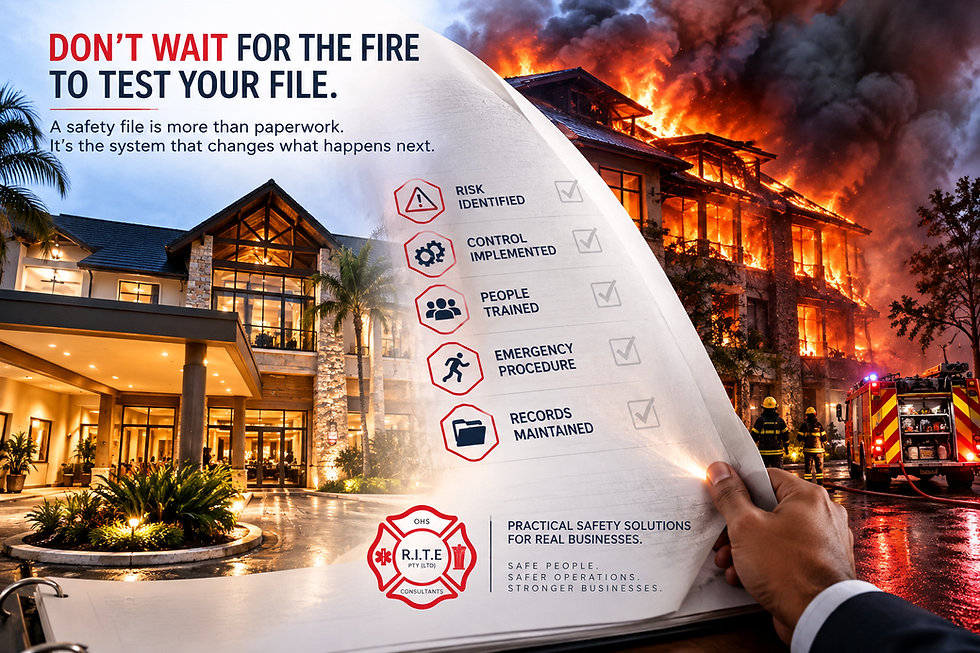
Typical workplace safety files include:
risk assessments,
appointments,
training records,
emergency procedures,
incident documentation,
inspections,
and workplace safety records.
Is OHS compulsory for small businesses in South Africa?
Yes.
Workplace safety responsibilities apply to businesses of all sizes under the Occupational Health and Safety Act..





Comments